AWS Compute Blog
Category: Technical How-to

Combining Amazon AppFlow with AWS Step Functions to maximize application integration benefits
This blog post explores how to integrate Amazon AppFlow and AWS Glue using Step Functions to automate your business requirements. You can use AWS Lambda to simplify the configuration phase and reduce state transitions or create complex checks, filters, or even data cleansing and preparation.
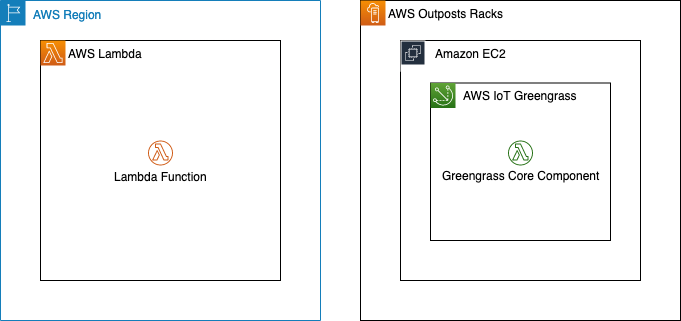
Running AWS Lambda functions on AWS Outposts using AWS IoT Greengrass
This blog post is written by Adam Imeson, Sr. Hybrid Edge Specialist Solution Architect. Today, AWS customers can deploy serverless applications in AWS Regions using a variety of AWS services. Customers can also use AWS Outposts to deploy fully managed AWS infrastructure at virtually any datacenter, colocation space, or on-premises facility. AWS Outposts extends the […]
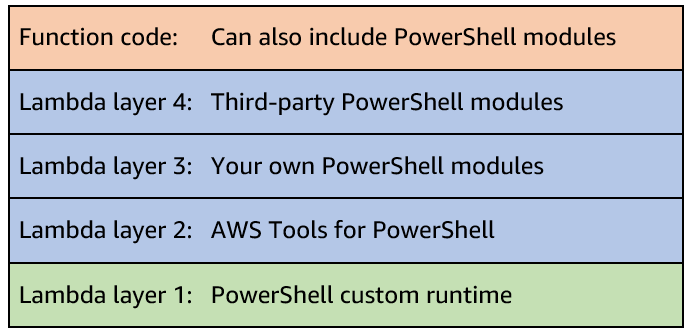
Extending PowerShell on AWS Lambda with other services
This post expands on the functionality introduced with the PowerShell custom runtime for AWS Lambda. The previous blog explains how the custom runtime approach makes it easier to run Lambda functions written in PowerShell. You can add additional functionality to your PowerShell serverless applications by importing PowerShell modules, which are shareable packages of code. Build your own […]

Amazon EC2 DL1 instances Deep Dive
This post is written by Amr Ragab, Principal Solutions Architect, Amazon EC2. AWS is excited to announce that the new Amazon Elastic Compute Cloud (Amazon EC2) DL1 instances are now generally available in US-East (N. Virginia) and US-West (Oregon). DL1 provides up to 40% better price performance for training deep learning models as compared to […]
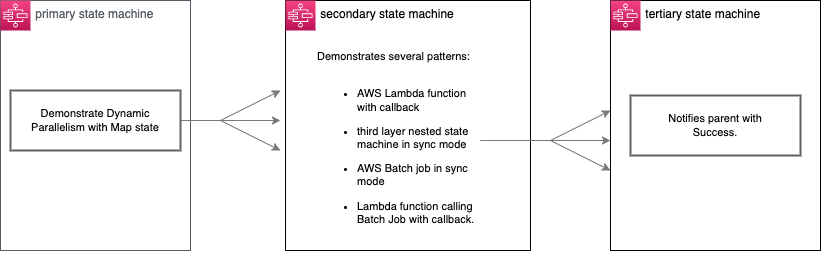
Orchestrating high performance computing with AWS Step Functions and AWS Batch
This blog post describes several challenges common to orchestrating HPC workloads. I describe how Step Functions with AWS Batch can solve many of these challenges. I provide a project that contains several sample patterns and show how to deploy and test this in your account.

Introducing global endpoints for Amazon EventBridge
This blog shows how to create an EventBridge global endpoint to improve the availability and reliability of event ingestion of event-driven applications. This example shows how to use the PutEvents in the Python AWS SDK to publish events to a global endpoint.

How to re-platform and modernize Java web applications on AWS
This post is written by: Bill Chan, Enterprise Solutions Architect According to a report from Grand View Research, “the global application server market size was valued at USD 15.84 billion in 2020 and is expected to expand at a compound annual growth rate (CAGR) of 13.2% from 2021 to 2028.” The report also suggests that […]
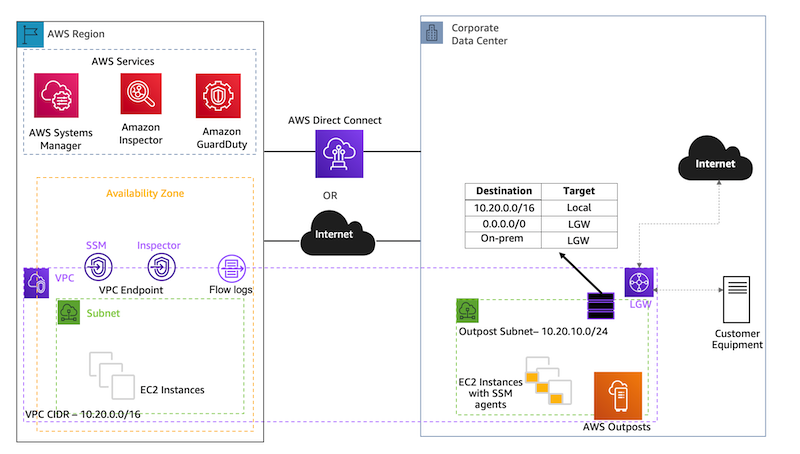
Managing and Securing AWS Outposts Instances using AWS Systems Manager, Amazon Inspector, and Amazon GuardDuty
This post is written by Sumeeth Siriyur, Specialist Solutions Architect. AWS Outposts is a family of fully managed solutions that deliver AWS infrastructure and services to virtually any on-premises or edge location for a truly consistent hybrid experience. Outposts is ideal for workloads that need low latency access to on-premises applications or systems, local data […]

Automate the Creation of On-Demand Capacity Reservations for running EC2 instances
This post is written by Ballu Singh a Principal Solutions Architect at AWS, Neha Joshi a Senior Solutions Architect at AWS, and Naveen Jagathesan a Technical Account Manager at AWS. Customers have asked how they can “create On-Demand Capacity Reservations (ODCRs) for their existing instances during events, such as the holiday season, Black Friday, marketing […]
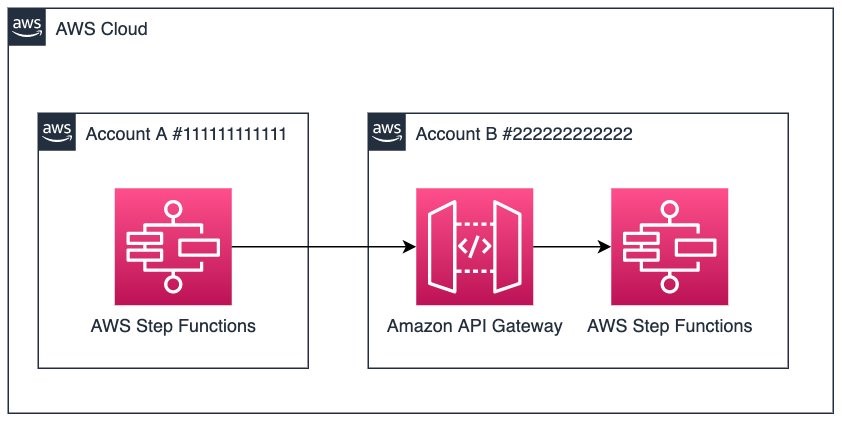
Running cross-account workflows with AWS Step Functions and Amazon API Gateway
This blog post provides a step-by-step guide on securely invoking a cross-account Step Functions workflow from a central account using API Gateway as front end. This pattern can be extended to scale workflow executions across different Regions and accounts.