AWS Database Blog
Category: Learning Levels
Backfilling an Amazon DynamoDB Time to Live (TTL) attribute with Amazon EMR
If you have complex data types such as maps and lists in your Amazon DynamoDB data, refer to Part 2 of this series. Bulk updates to a database can be disruptive and potentially cause downtime, performance impacts to your business processes, or overprovisioning of compute and storage resources. When performing bulk updates, you want to […]

Implementing bulk CSV ingestion to Amazon DynamoDB
June 2023: Amazon DynamoDB can now import Amazon S3 data into a new table. DynamoDB import from S3 helps you to bulk import terabytes of data from Amazon S3 into a new DynamoDB table with no code or servers required. November 2022: This post was reviewed and updated for accuracy. This post reviews what solutions […]

Using IAM authentication to connect with pgAdmin Amazon Aurora PostgreSQL or Amazon RDS for PostgreSQL
This blog post was last reviewed and updated July, 2024. Amazon Relational Database Service (RDS) enables you to use AWS Identity and Access Management (IAM) to manage database access for Amazon RDS for PostgreSQL database instances and Amazon Aurora PostgreSQL clusters. Database administrators can associate database users with IAM users and roles. With IAM database authentication, you don’t need to use a […]
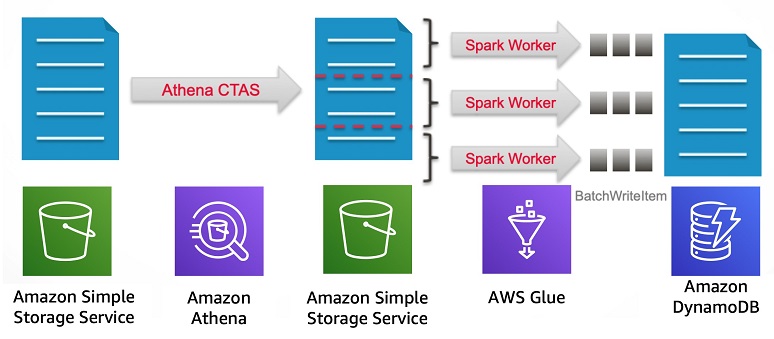
How realtor.com maximized data upload from Amazon S3 into Amazon DynamoDB
This is a customer post by Arup Ray, VP Data Technology at realtor.com, and Daniel Whitehead, AWS Solutions Architect. Arup Ray would like to acknowledge Anil Pillai, Software Development Engineer at Amazon, for his pioneering contributions to this project during his former tenure at realtor.com as Senior Principal Data Engineer. realtor.com , operated by Move, Inc., […]

Working with RDS and Aurora PostgreSQL logs: Part 2
July 2023: This post was reviewed for accuracy. The first post in this series, Working with RDS and Aurora PostgreSQL Logs: Part 1, discussed the importance of PostgreSQL logs and how to tune various parameters to capture more database activity details. PostgreSQL logs provide useful information when troubleshooting database issues. This post focuses on different […]
Working with RDS and Aurora PostgreSQL logs: Part 1
July 2023: This post was reviewed for accuracy. PostgreSQL is one of the most popular open-source relational database systems. With more than 30 years of development work, PostgreSQL has proven to be a highly reliable and robust database that can handle a large number of complicated data workloads. AWS provides two managed PostgreSQL options: Amazon […]
Running safe, smart, and connected machines on AWS
This is a guest post from Henri Gort, Platform Architect, and Mehmet Yalcinkaya, Data Lake Software Engineer from Konecranes. In their own words, “Konecranes is a world-leading group of Lifting Businesses, serving a broad range of customers, including manufacturing and process industries, shipyards, ports, and terminals. The word ‘Konecranes’ includes the Finnish word ‘Kone,’ or […]

Capture graph changes using Neptune Streams
August 30, 2023: Amazon Kinesis Data Analytics has been renamed to Amazon Managed Service for Apache Flink. Read the announcement in the AWS News Blog and learn more. Many graph applications can benefit from the ability to capture changes to items stored in an Amazon Neptune database, at the point in time when such changes […]

Optimizing and tuning queries in Amazon RDS PostgreSQL based on native and external tools
January 2024: This post was reviewed and updated for accuracy. PostgreSQL is one of the most popular open-source relational database systems. The product of more than 30 years of development work, PostgreSQL has proven to be a highly reliable and robust database that can handle a large number of complicated data workloads. PostgreSQL is considered […]

Running AWS Lambda-based applications with Amazon DocumentDB
Microservices-based applications architectures are the norm for building scalable applications. AWS makes creating these types of applications easier with Amazon DocumentDB (with MongoDB compatibility). Just bring your code and deploy an application with this fast, scalable, highly available, and fully managed document database service that supports MongoDB workloads. You can use the same MongoDB application […]