AWS Architecture Blog

Design Pattern for Highly Parallel Compute: Recursive Scaling with Amazon SQS
Scaling based on Amazon Simple Queue Service (SQS) is a commonly used design pattern. At AWS Professional Services, we have recently used a variant of this pattern to achieve highly parallel computation for larger customers. In fact, any use case with a tree-like set of entities can use this pattern. It’s useful in a workflow […]

IT Resilience Within AWS Cloud, Part II: Architecture and Patterns
In Part I of this two-part blog, we outlined best practices to consider when building resilient applications in hybrid on-premises/cloud environments. We also showed you how to adapt mindsets and organizational culture. In Part II, we’ll provide technical considerations related to architecture and patterns for resilience in AWS Cloud. Considerations on architecture and patterns The […]

Disaster Recovery (DR) Architecture on AWS, Part I: Strategies for Recovery in the Cloud
As lead solutions architect for the AWS Well-Architected Reliability pillar, I help customers build resilient workloads on AWS. This helps them prepare for disaster events, which is one of the biggest challenges they can face. Such events include natural disasters like earthquakes or floods, technical failures such as power or network loss, and human actions […]

Field Notes: How FactSet Balances Developer Velocity with Governance using AWS IAM
This post was co-written by FactSet’s Cloud Infrastructure team, Gaurav Jain, Nathan Goodman, Geoff Wang, Daniel Cordes, Sunu Joseph and AWS Solution Architects, Amit Borulkar and Tarik Makota. At FactSet, their goal for cloud platform on AWS Cloud is to have high developer velocity alongside enterprise governance. They wanted application teams to have a frictionless […]

Scaling RStudio/Shiny using Serverless Architecture and AWS Fargate
Data scientists use RStudio server as an Integrated Development Environment (IDE) to develop, publish, and share interactive web dashboards built on Shiny Server. Although it is possible to use virtual server infrastructure in the cloud to run R workloads, containerization offers significant operational benefits. Migrating R workloads into a serverless model in AWS, customers can […]

Field Notes: Scaling Browser Automation with Puppeteer on AWS Lambda with Container Image Support
This post is contributed by Bill Kerr, SHI and Raj Seshadri, Global SA Lead, AWS. Imagine you are launching a brand new website selling goods and services. You are expecting a huge amount of traffic due to the seasonality of the product. You would like to test 100K simultaneous connections to the website and make […]

IT Resilience Within AWS Cloud, Part I: Mindset and Culture
As customers migrate to the cloud, many struggle to adapt business continuity and operational plans from their on-premises environments. This affects the resilience of critical business applications and can stall cloud adoption. This two-part blog series will provide guidance on implementing IT resilience strategies. In Part I, we’ll review challenges commonly experienced by executive builders. […]

Field Notes: Fleet Tracking Using Amazon Location Service with AWS IoT
Location-based intelligence is vital in today’s applications, enabling capabilities ranging from fleet tracking to hyperlocal marketing. However, developers face significant barriers when integrating location data into their applications. These include cost, privacy and security compromises, and tedious and slow integration work. With Amazon Location Service, you can add capabilities such as maps, points of interest, […]

Expose AWS Lambda Function Behind Static IP When a DNS Cannot be Managed
Up until recently, the best practice to expose an AWS Lambda function has been to use Amazon API Gateway. This solution protects your functions from direct client traffic. This is explained in the API Gateway tutorial, where Amazon API Gateway acts as a proxy in front of the Lambda function. This practice is useful when […]
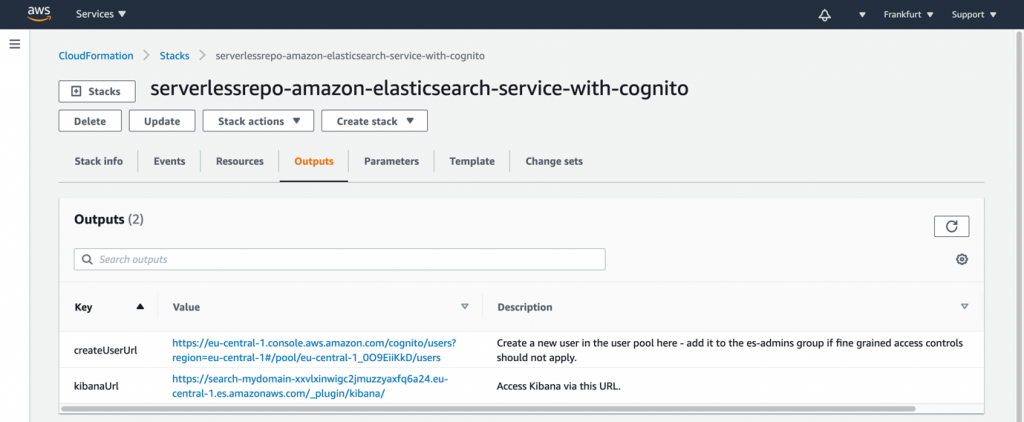
Field Notes: Launch Amazon Elasticsearch Service with Fine-Grained Access Control and Amazon Cognito
September 8, 2021: Amazon Elasticsearch Service has been renamed to Amazon OpenSearch Service. See details. Originally published March 2020 to the Field Notes blog, and reviewed for technical accuracy in March 2021. To get started with Amazon Elasticsearch Service (Amazon ES), you must have a concept for authentication and authorization for your search cluster. In addition to […]