AWS Compute Blog
Tag: AWS Lambda

Building well-architected serverless applications: Understanding application health – part 1
This series of blog posts uses the AWS Well-Architected Tool with the Serverless Lens to help customers build and operate applications using best practices. In each post, I address the nine serverless-specific questions identified by the Serverless Lens along with the recommended best practices. See the Introduction post for a table of contents and explaining […]

Building a Raspberry Pi telepresence robot using serverless: Part 1
A Pimoroni STS-Pi Robot Kit connected to AWS for remote control and viewing. A telepresence robot allows you to explore remote environments from the comfort of your home through live stream video and remote control. These types of robots can improve the lives of the disabled, elderly, or those that simply cannot be with their […]
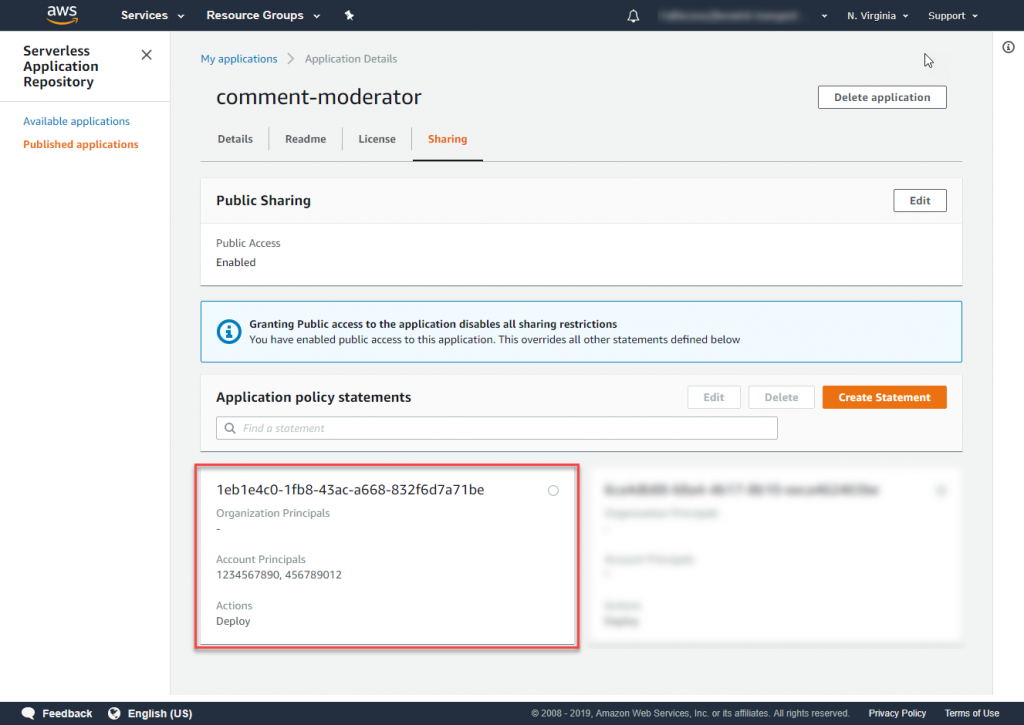
The AWS Serverless Application Repository adds sharing for AWS Organizations
The AWS Serverless Application Repository (SAR) enables builders to package serverless applications and reuse these within their own AWS accounts, or share with a broader audience. Previously, SAR applications could only be shared with specific AWS account IDs or made publicly available to all users. For organizations with large numbers of AWS accounts, this means […]
Generating REST APIs from data classes in Python
This post is courtesy of Robert Enyedi – Senior Research Engineer – AI Labs Implementing and managing public APIs is greatly simplified by API Gateway. Among the various features of API Gateway, the ability to import API definitions in the Open API format is powerful. In this post, I show how you can automatically generate REST […]

AWS Lambda now supports Ruby 2.7
You can now develop your AWS Lambda functions using Ruby 2.7. Start using this runtime today by specifying a runtime parameter value of ruby2.7 when creating or updating Lambda functions. New Ruby runtime features Ruby 2.7 is a stable release and brings several new features, including pattern matching, argument forwarding, and numbered arguments. Pattern matching […]
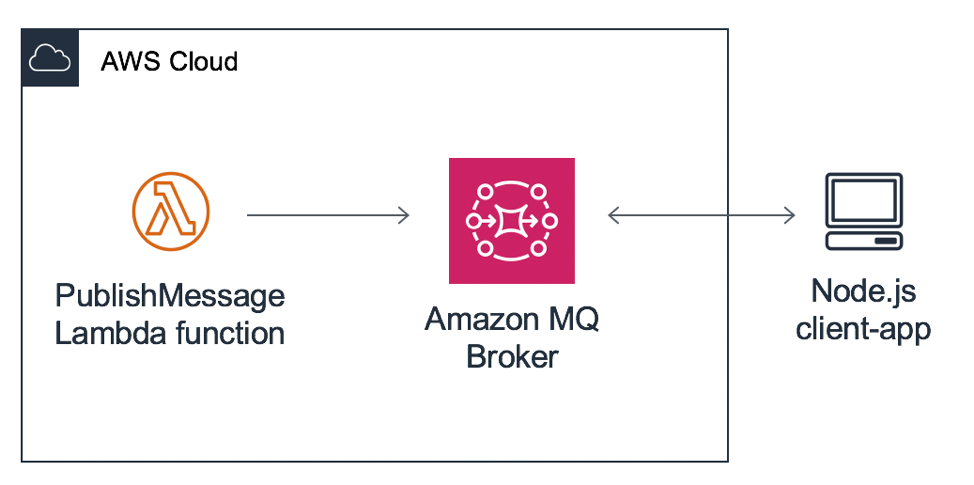
Deploy and publish to an Amazon MQ broker using AWS serverless
If you’re managing a broker on premises or in the cloud with a dependent existing infrastructure, Amazon MQ can provide easily deployed, managed ActiveMQ brokers. These support a variety of messaging protocols that can offload operational overhead. That can be useful when deploying a serverless application that communicates with one or more external applications that […]

Building a serverless URL shortener app without AWS Lambda – part 1
When building applications, developers often use a standard multi-tier architecture pattern that generally includes a presentation, processing, and data tier. When building such an application using serverless technologies on AWS, it might look like the following: In this three-part series, I am going to challenge you to approach this a different way by building a […]

Integrating Amazon EventBridge into your serverless applications
Event-driven architecture enables developers to create decoupled services across applications. When combined with the range of managed services available in AWS, this approach can make applications highly scalable and flexible, with minimal maintenance. Many services in the AWS Cloud produce events, including integrated software as a service (SaaS) applications. Your custom applications can also produce […]

Reducing custom code by using advanced rules in Amazon EventBridge
Amazon EventBridge allows you to route events between AWS services, integrated software as a service (SaaS) applications, and your own applications. Event producers publish events onto an event bus, which uses rules to determine where to send those events. The rules can specify one or more targets, which can be other AWS services or Lambda […]
ICYMI: Serverless Q4 2019
Welcome to the eighth edition of the AWS Serverless ICYMI (in case you missed it) quarterly recap. Every quarter, we share the most recent product launches, feature enhancements, blog posts, webinars, Twitch live streams, and other interesting things that you might have missed! In case you missed our last ICYMI, checkout what happened last quarter […]