AWS Architecture Blog
Category: Management Tools
Deploy open source Regional availability tools in your VPC
Deploy AWS Regional availability data as infrastructure you own. Capability Insights for AWS runs a self-hosted dashboard in your VPC that auto-refreshes daily, and Workload Analysis narrows the catalog to the services your account actually runs, so your Regional expansion gap analysis focuses only on what you deploy.
Adobe Firefly: Simplified observability with Amazon Managed Prometheus
Learn how Adobe Firefly achieved 28x faster GPU metric queries by migrating from self-managed Prometheus to Amazon Managed Service for Prometheus, with improvements in query performance, infrastructure reliability, and operational efficiency.
Building multi-Region resiliency for AWS CloudFormation custom resource deployment
AWS CloudFormation is the foundational tool of infrastructure-as-code for thousands of organizations running workloads on AWS. But as teams push the boundaries of what CloudFormation can do natively, custom resources have emerged as a powerful extension mechanism that unlocks a broad range of possibilities. Yet, when it comes to building resilient, multi-Region deployments with custom […]
Architecting AI-powered resilience framework on AWS
In this post, you’ll learn how to architect and implement a five-layer AI-powered resilience framework that automatically discovers dependencies, generates targeted experiments, and integrates with your existing Continuous Integration/Continuous Deployment (CI/CD) pipelines. First, we’ll explore the key challenges in resilience testing. Then, we’ll walk through the five-layer architecture that solves these challenges. Finally, we’ll show you how to implement this, with phased rollout guidance for pilot, expansion, and organization-wide deployment.
Building highly available Oracle databases with Amazon FSx for NetApp ONTAP
This post shows how to build a highly available Oracle database architecture using FSxN shared storage, Auto Scaling groups with dynamic AMI updates, and serverless orchestration to help reduce recovery times with current configurations.
Automating contract intelligence with Doczy.ai™ on AWS
In this post, we show you how Doczy.ai™ uses generative AI on AWS to automate contract intelligence at scale, transforming unstructured documents into structured, actionable insights, so organizations can automate critical business processes and unlock the full value of their data.
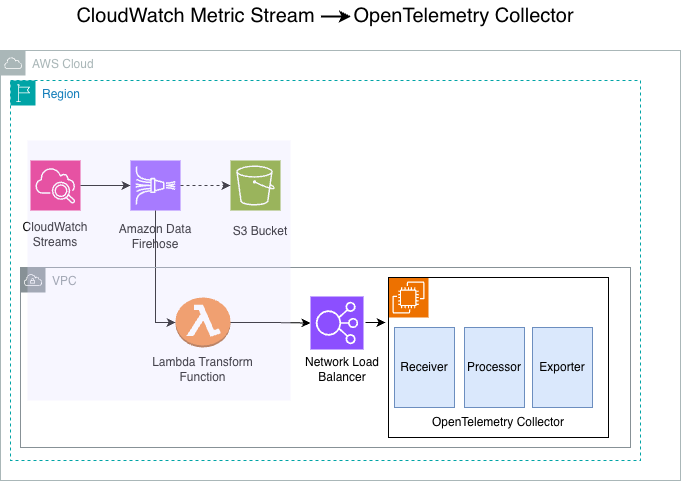
Streaming CloudWatch metrics to VPC-based OpenTelemetry collectors using Lambda
In this post, we demonstrate an approach we used to address this challenge for a customer by implementing an AWS Lambda transformation function that streams Amazon CloudWatch metrics directly to internal OpenTelemetry collectors running within a VPC.
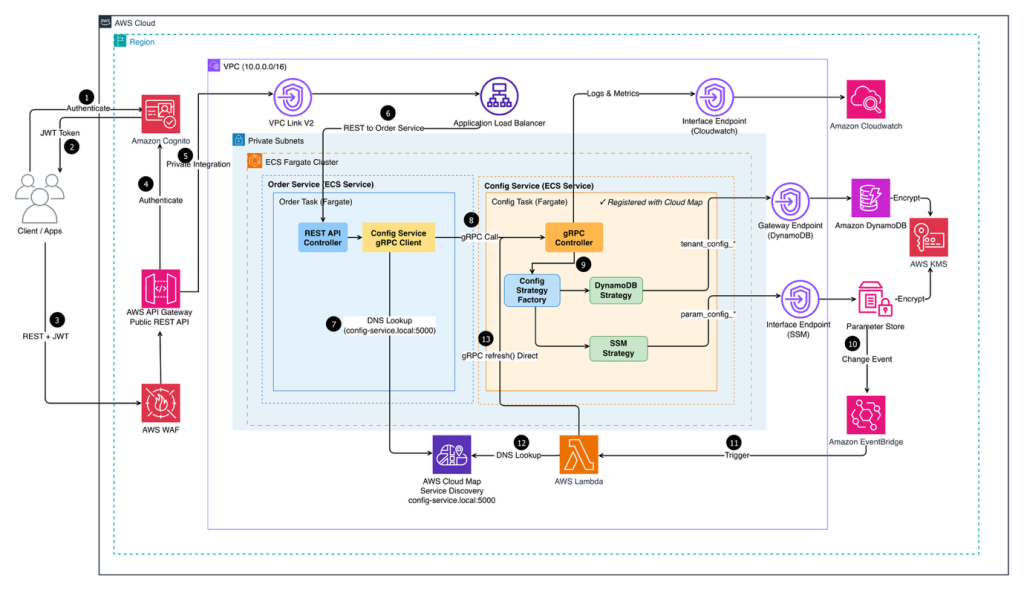
Build a multi-tenant configuration system with tagged storage patterns
In this post, we demonstrate how you can build a scalable, multi-tenant configuration service using the tagged storage pattern, an architectural approach that uses key prefixes (like tenant_config_ or param_config_) to automatically route configuration requests to the most appropriate AWS storage service. This pattern maintains strict tenant isolation and supports real-time, zero-downtime configuration updates through event-driven architecture, alleviating the cache staleness problem.
How Generali Malaysia optimizes operations with Amazon EKS
In this post, we look at how Generali is using Amazon EKS Auto Mode and its integration with other AWS services to enhance performance while reducing operational overhead, optimizing costs, and enhancing security.
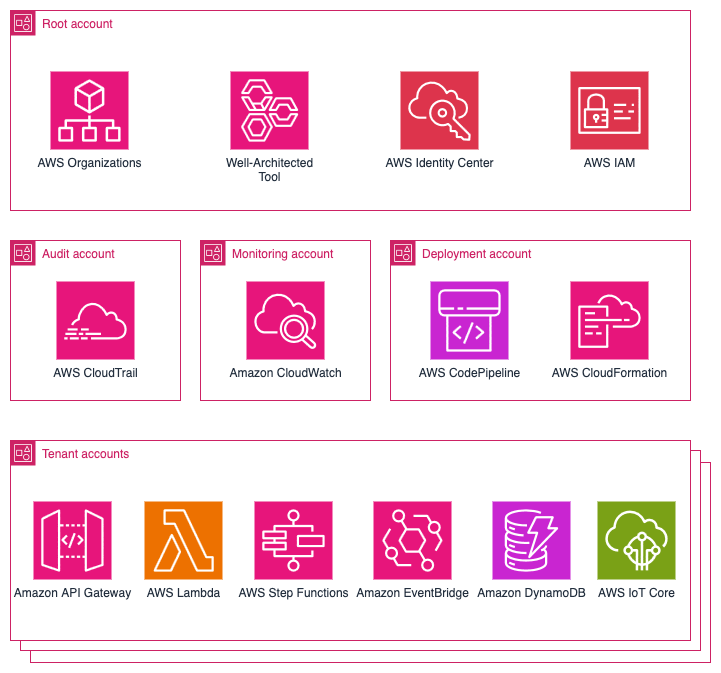
6,000 AWS accounts, three people, one platform: Lessons learned
This post describes why ProGlove chose a account-per-tenant approach for our serverless SaaS architecture and how it changes the operational model. It covers the challenges you need to anticipate around automation, observability and cost. We will also discuss how the approach can affect other operational models in different environments like an enterprise context.