AWS for M&E Blog
Category: Technical How-to

How to screencast apps using Amazon Kinesis Video Streams with WebRTC on Android
Over the past year, the requirements for remote communication have increased rapidly. Historically, over-the-top (OTT) content delivery was focused on reliably delivering high-quality content. There was less concern about latency, so technology was not focused on transmitting media with minimum delay time. With WebRTC technology that supports media transmission with latency of less than 1 […]
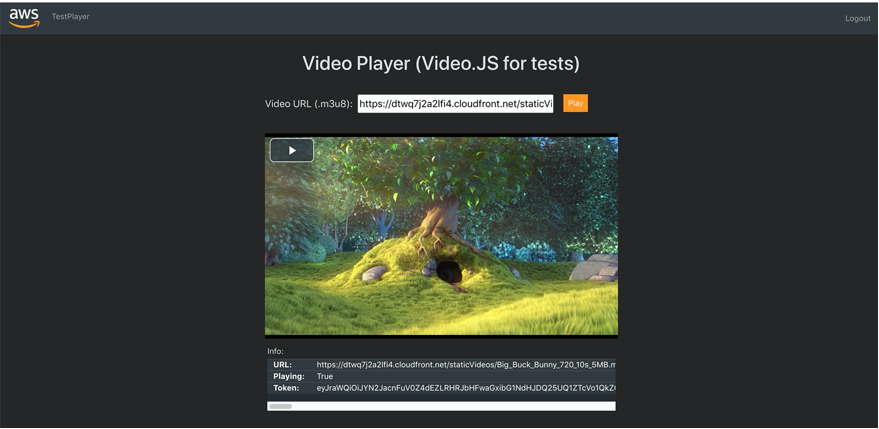
Protecting your media assets with token authentication
Video streaming is no longer exclusively done by media companies. Schools, ecommerce retailers, tech companies, and banks are creating media content to distribute directly to their consumers. Video streaming, both live and on-demand, has become the prevailing communication tool to reach the target audiences. As the value and number of media assets grow, creating a […]
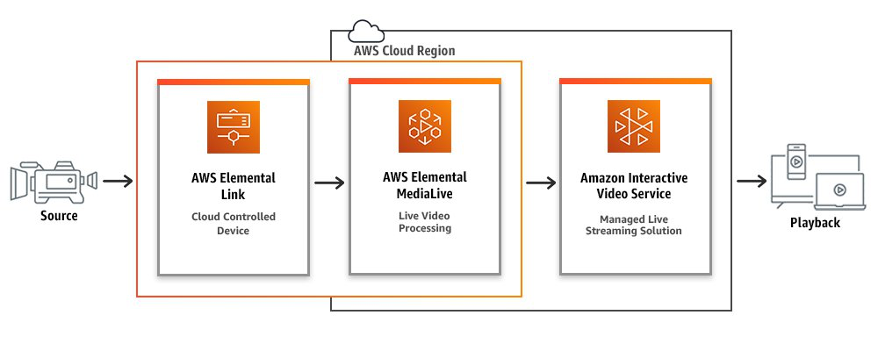
Delivering a reliable live video stream using AWS Elemental Link and Amazon IVS
Working remotely has become more common, so many customers are looking for easy-to-setup and cost-efficient ways to deliver a reliable live video stream to their customers, colleagues, and business partners. For example, an auctioneer may want to stream their auctions for online bidding or a teacher may need to deliver remote lectures with live Q&A. For […]

Amazon Transcribe and email integration
Amazon Transcribe makes it easy for developers to add speech to text capabilities (also known as ASR) to their applications. Audio data is virtually impossible for computers to search and analyze. Therefore, recorded speech needs to be converted to text before it can be used by business intelligence applications. This post shows how an audio […]

Processing user-generated content using AWS Lambda and FFmpeg
In this post, we introduce a workflow to process media files stored in Amazon Simple Storage Service (Amazon S3) using AWS Lambda that doesn’t require copying files to Lambda’s local storage. Lambda is equipped with temporary storage space of 512 MB, which is often not sufficient for media processing. At the same time, Lambda can […]

Build a live streaming app with user-generated content in less than an hour with Amazon IVS
User-generated content (UGC) forms the backbone of many popular social media services today. As internet access becomes more widespread, many people are using apps and services to share their own, personal experiences to a global audience. In recent years, live streaming video services featuring user-generated content have become a powerful way to connect with others […]

Automate broadcast video monitoring using machine learning on AWS
Monitoring service providers for broadcast and over-the-top (OTT) livestreams perform a large number of quality checks. These range from low-level signal errors to high-level issues like content errors. Traditional live media analyzer software focus on quality checks at the signal level, such as the ETSI TR 101 290 Priority 1 and 2 checks. Higher-level quality checks, such as […]

Anatomy of a live streaming AWS CloudFormation template
To build an end-to-end, live video streaming workflow with AWS, you typically begin by setting up each of the required AWS Media Services through the AWS Management Console. The console is a great tool to explore all the features each Media Service offers, and the settings you can enable, disable, or tweak as you put […]

Build a reliable HLS live channel with AWS Elemental MediaStore
For resilient live streams, you usually have two encoders, which creates two master manifests. However, that on its own is not enough. If one of the encoders suffers a failure – let’s say encoder 1 – the manifests for encoder 1 becomes stale (no longer updated), while encoder 2’s manifests and A/V segments continue to […]

Enhanced origin failover using Amazon CloudFront and AWS Lambda@Edge
Recently, an AWS customer serviced more than 10 billion API calls per day at peak. They needed a failover option for brown-outs and other origin failures. They served these API calls through Amazon CloudFront, a content delivery network (CDN) that securely delivers static and dynamic web content with low latency and high transfer speeds using […]