AWS Compute Blog
Managing domain membership of dynamic fleet of EC2 instances
This post is written by Alex Zarenin, Senior AWS Solution Architect, Microsoft Tech. Updated: February 10, 2021 1. Introduction For most companies, a move of Microsoft workloads to AWS starts with “lift and shift” where existing workloads are moved from the on-premises data centers to the cloud. These workloads may include WEB and API farms, […]

Extending SaaS products with serverless functions
As customers increasingly use SaaS solutions in their businesses, they want the same customization and extensibility available in on-premises solutions. SaaS partners have developed APIs and integration hooks to help address this need. For more sophisticated customization, products enable custom code to run within their SaaS workflows.
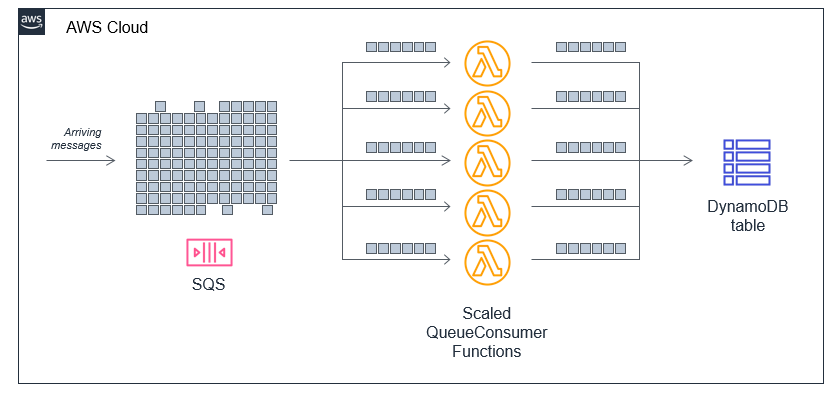
Operating Lambda: Application design – Scaling and concurrency: Part 2
This post explains scaling and concurrency in Lambda and the different behaviors of on-demand and Provisioned Concurrency. It also shows how to use service integrations and asynchronous patterns in Lambda-based applications. Finally, I discuss how reserved concurrency works and how to use it in your application design.

Testing EC2 Image Builder pipelines using Chef InSpec
This post was written by Anoop Rachamadugu – AWS Cloud Architect. The EC2 Image Builder service helps users to build and maintain server images to use with Amazon EC2 and on-premises using automated build pipelines. As new images are created by the pipelines, you can configure automated tests to validate the image, before distributing it […]

Configuring private integrations with Amazon API Gateway HTTP APIs
This post was written by Michael Hume – AWS Solutions Architect Public Sector UKIR. Customers often want to use Amazon API Gateway REST APIs to send requests to private resources. This feature is useful for building secure architectures using Amazon EC2 instances or container-based services on Amazon ECS or Amazon EKS, which reside within a […]

Node.js 14.x runtime now available in AWS Lambda
You can now develop AWS Lambda functions using the Node.js 14.x runtime. This is the current Long Term Support (LTS) version of Node.js. Start using this new version today by specifying a runtime parameter value of nodejs14.x when creating or updating functions or by using the appropriate managed runtime base image. Language Updates Node.js 14 is a […]
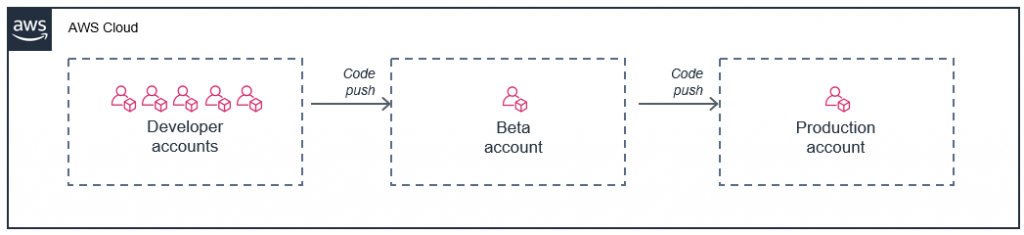
Operating Lambda: Application design and Service Quotas – Part 1
Lambda works with other AWS services to process and manage requests and data. This post explains how to understand and manage Service Quotas, when to request increases, and architecting with quotas in mind. It also explains how to control traffic for downstream server-based resources.

Building server-side rendering for React in AWS Lambda
This post demonstrates two ways you can implement and deploy a solution for server-side rendering in React applications, by using Lambda or Lambda@Edge. It also shows how to use open-source tools and AWS CDK to automate the building and deployment of such applications.

Running cost optimized Spark workloads on Kubernetes using EC2 Spot Instances
This post is written by Kinnar Sen, Senior Solutions Architect, EC2 Spot Apache Spark is an open-source, distributed processing system used for big data workloads. It provides API operations to perform multiple tasks such as streaming, extract transform load (ETL), query, machine learning (ML), and graph processing. Spark supports four different types of cluster managers (Spark standalone, Apache […]

Building a Jenkins Pipeline with AWS SAM
This post is courtesy of Tarun Kumar Mall, SDE at AWS. This post shows how to set up a multi-stage pipeline on a Jenkins host for a serverless application, using the AWS Serverless Application Model (AWS SAM). Overview This tutorial uses Jenkins Pipeline plugin. A commit to the main branch of the repository starts and […]