Artificial Intelligence
Category: Financial Services
From PDFs to insights: Architecting an intelligent document processing pipeline with AWS generative AI services
This post outlines the development of a cost-effective and scalable intelligent document processing pipeline on AWS, powered by Amazon Bedrock and its features. BDA is a managed service within Amazon Bedrock that automates the extraction of insights from documents. We demonstrate how BDA extracts and analyzes document content, while Strands Agent hosted on Amazon Bedrock AgentCore Runtime coordinate specialized processing tasks, and Amazon Bedrock Knowledge Base enable contextual understanding across multiple documents. By combining these capabilities within a unified architecture, organizations can transform their document processing workflows with minimal development effort.
Building AI-ready data: Vanguard’s Virtual Analyst journey
In this post, you’ll learn how Vanguard built their Virtual Analyst solution by focusing on eight guiding principles of AI-ready data, the AWS services that powered their implementation, and the measurable business outcomes they achieved.
Migrating a text agent to a voice assistant with Amazon Nova 2 Sonic
In this post, we explore what it takes to migrate a traditional text agent into a conversational voice assistant using Amazon Nova 2 Sonic. We compare text and voice agent requirements, highlight design priorities for different use cases, break down agent architecture, and address common concerns like tools and sub-agents for reuse and system prompt adaptation. This post helps you navigate the migration process and avoid common pitfalls.
Rocket Close transforms mortgage document processing with Amazon Bedrock and Amazon Textract
Through a strategic partnership with the AWS Generative AI Innovation Center (GenAIIC), Rocket Close developed an intelligent document processing solution that has significantly reduced processing time, making the process 15 times faster. The solution, which uses Amazon Textract for OCR processing and Amazon Bedrock for foundation models (FMs), achieves a strong 90% overall accuracy in document segmentation, classification, and field extraction.
Enforce data residency with Amazon Quick extensions for Microsoft Teams
In this post, we will show you how to enforce data residency when deploying Amazon Quick Microsoft Teams extensions across multiple AWS Regions. You will learn how to configure multi-Region Amazon Quick extensions that automatically route users to AWS Region-appropriate resources, helping keep compliance with GDPR and other data sovereignty requirements.
How Lendi revamped the refinance journey for its customers using agentic AI in 16 weeks using Amazon Bedrock
This post details how Lendi Group built their AI-powered Home Loan Guardian using Amazon Bedrock, the challenges they faced, the architecture they implemented, and the significant business outcomes they’ve achieved. Their journey offers valuable insights for organizations that want to use generative AI to transform customer experiences while maintaining the human touch that builds trust and loyalty.
How LinqAlpha assesses investment theses using Devil’s Advocate on Amazon Bedrock
LinqAlpha is a Boston-based multi-agent AI system built specifically for institutional investors. The system supports and streamlines agentic workflows across company screening, primer generation, stock price catalyst mapping, and now, pressure-testing investment ideas through a new AI agent called Devil’s Advocate. In this post, we share how LinqAlpha uses Amazon Bedrock to build and scale Devil’s Advocate.
How the Amazon AMET Payments team accelerates test case generation with Strands Agents
In this post, we explain how we overcame the limitations of single-agent AI systems through a human-centric approach, implemented structured outputs to significantly reduce hallucinations and built a scalable solution now positioned for expansion across the AMET QA team and later across other QA teams in International Emerging Stores and Payments (IESP) Org.
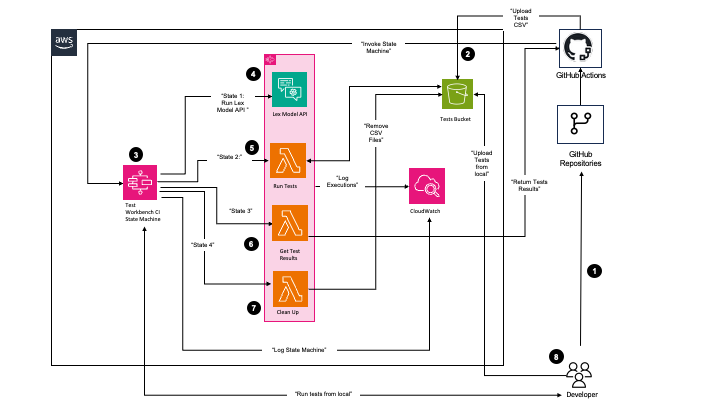
Principal Financial Group accelerates build, test, and deployment of Amazon Lex V2 bots through automation
In the post Principal Financial Group increases Voice Virtual Assistant performance using Genesys, Amazon Lex, and Amazon QuickSight, we discussed the overall Principal Virtual Assistant solution using Genesys Cloud, Amazon Lex V2, multiple AWS services, and a custom reporting and analytics solution using Amazon QuickSight.
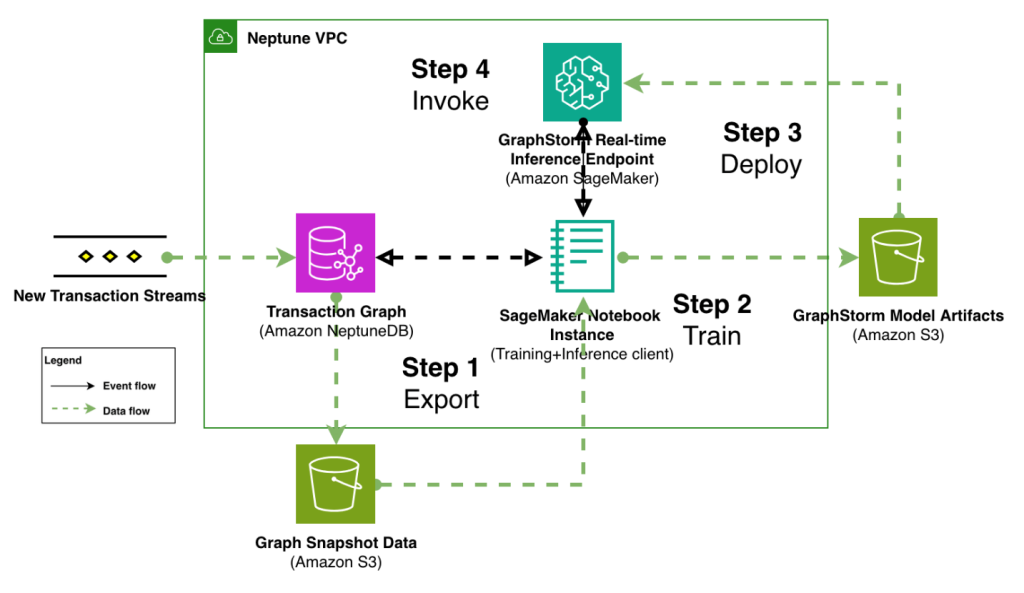
Modernize fraud prevention: GraphStorm v0.5 for real-time inference
In this post, we demonstrate how to implement real-time fraud prevention using GraphStorm v0.5’s new capabilities for deploying graph neural network (GNN) models through Amazon SageMaker. We show how to transition from model training to production-ready inference endpoints with minimal operational overhead, enabling sub-second fraud detection on transaction graphs with billions of nodes and edges.