Category: Webinars
AWS Webinars – January 2017 (Bonus: December Recap)
Have you had time to digest all of the announcements that we made at AWS re:Invent? Are you ready to debug with AWS X-Ray, analyze with Amazon QuickSight, or build conversational interfaces using Amazon Lex? Do you want to learn more about AWS Lambda, set up CI/CD with AWS CodeBuild, or use Polly to give your applications a voice?
January Webinars
In our continued quest to provide you with training and education resources, I am pleased to share the webinars that we have set up for January. These are free, but they do fill up and you should definitely register ahead of time. All times are PT and each webinar runs for one hour:
January 16:
- 9:00 AM – Announcing AWS X-Ray: Analyze and Debug Your Applications.
- 10:30 AM – Announcing Amazon Aurora with PostgreSQL Compatibility.
- Noon – Introducing Amazon QuickSight: Business Analytics for Everyone.
January 17:
- 9:00 AM – Announcing AWS Personal Health Dashboard: View and Manage the Health of your AWS Resources.
- 10:30 AM – Announcing Amazon Lex: Build Conversational Interfaces through Voice or Text.
January 18::
- 9:00 AM- Announcing Amazon Lightsail: Launch and Manage Simple Virtual Private Servers.
- 10:30 AM – Deep Dive on AWS Lambda.
- Noon – Announcing AWS OpsWorks for Chef Automate.
January 19:
- 9:00 AM – Deep Dive on Amazon EC2 Instances – Featuring New Instances.
- 10:30 AM – Announcing AWS Greengrass: Use AWS Lambda and AWS IoT on Your Device.
January 20
- 9:00 AM – Announcing Amazon Pinpoint: Targeted Push Notifications for Mobile Apps.
- 10:30 AM – Announcing Amazon AppStream 2.0: Stream Desktop Applications from AWS without Rewriting Them.
- Noon – Announcing AWS CodeBuild: Accelerating Software Delivery with AWS CodeBuild, AWS CodePipeline, and AWS CodeDeploy.
December Webinar Recap
The December webinar series is already complete; here’s a quick recap with links to the recordings:
December 12:
- Deep Dive on S3 Storage Management Covering New Feature Announcements.
- Deep Dive on Amazon Glacier Covering New Retrieval Features.
- Announcing AWS Batch: Run Batch Jobs At Scale.
December 13:
- Announcing Amazon Polly: Turn Text into Lifelike Speech.
- Announcing Amazon Rekognition: Deep Learning-Based Image Analysis.
December 14:
- Deep Dive on Amazon Aurora Covering New Feature Announcements.
- Announcing Amazon Athena: Query Data on S3 without Managing Infrastructure.
- Announcing Blox: Open Source Projects for Customizing Scheduling on Amazon ECS.
December 15:
- Announcing Amazon EC2 F1 instances with Custom FPGAs.
- Announcing AWS Snowball Edge and AWS Snowmobile: Collect, Analyze and Move Extremely Large Data Sets.
- Announcing Amazon Shield: Protect Web Applications from DDoS Attacks.
December 16:
- Announcing Lambda @ the Edge.
- Announcing Amazon EC2 Systems Manager – Hybrid Cloud Management at Scale.
- Announcing AWS Step Functions.
— Jeff;
PS – If you want to get a jump start on your 2017 learning objectives, the re:Invent 2016 Presentations and re:Invent 2016 Videos are just a click or two away.
AWS Webinars – October and November 2016
Are you keeping up with the latest developments in AWS-land? Do you have a good understanding of Amazon Redshift, Amazon ECS, and Amazon Cognito? Do you know what IoT is all about, and do you have firm grasp of the best security practices for your cloud workloads? Do you understand the EC2 Spot Market, and do you know how to use it to your advantage?
In pursuit of our focus on training and education, I am pleased to share the webinars that we have on tap for October and November. These are free, but they do fill up and I suggest that you register ahead of time. All times are PT and each webinar runs for one hour:
October 25
- 9:00 AM – Amazon ECS Deep Dive.
- 10:30 AM – Real-time Data Processing using AWS Lambda.
- Noon – Fast Data at Scale with Amazon ElastiCache for Redis.
October 26
- 9:00 AM – Add User Sign-In and Management to Your Apps with Amazon Cognito.
- 10:30 AM – Getting Started: Storage with Amazon S3 and Amazon Glacier.
- Noon – Build Scalable and Secure Mobile Applications with AWS.
- 1:30 PM – Amazon Redshift Deep Dive.
October 27
- 10:30 AM – The Lifecycle of an AWS IoT Thing – From Manufacture to Retirement.
- Noon – Best Practices for IoT Security in the Cloud.
November 2
November 8
- 9:00 AM – Getting Started with AWS.
- 10:30 AM – Setup Preconfigured Protections on AWS WAF.
- Noon – RDS for Oracle and SQL Server: Simplifying Your Database Management and Reducing Total Cost of Ownership.
November 9
- 9:00 AM – Configuration Management with AWS OpsWorks.
- Noon – Best Practices for Protecting Cloud Workloads.
November 10
- 9:00 AM – Getting Started with Amazon EC2 Spot: Save up to 90% on your EC2 Bill.
- 10:30 AM – Introduction to Three AWS Security Services: AWS IAM, AWS Config Rules, and AWS CloudTrail Services.
- Noon – Streamline Your Desktop Operations and Improve Security with Amazon WorkSpaces.
— Jeff;
PS – Don’t forget our upcoming re:Invent 2016 Preparation Webinars!
AWS Week in Review – September 27, 2016
Fourteen (14) external and internal contributors worked together to create this edition of the AWS Week in Review. If you would like to join the party (with the possibility of a free lunch at re:Invent), please visit the AWS Week in Review on GitHub.
New & Notable Open Source
- dynamodb-continuous-backup sets up continuous backup automation for DynamoDB.
- lambda-billing uses NodeJS to automate billing to AWS tagged projects, producing PDF invoices.
- vyos-based-vpc-wan is a complete Packer + CloudFormation + Troposphere powered setup of AMIs to run VyOS IPSec tunnels across multiple AWS VPCs, using BGP-4 for dynamic routing.
- s3encrypt is a utility that encrypts and decrypts files in S3 with KMS keys.
- lambda-uploader helps to package and upload Lambda functions to AWS.
- AWS-Architect helps to deploy microservices to Lambda and API Gateway.
- awsgi is an WSGI gateway for API Gateway and Lambda proxy integration.
- rusoto is an AWS SDK for Rust.
- EBS_Scripts contains some EBS tricks and triads.
- landsat-on-aws is a web application that uses Amazon S3, Amazon API Gateway, and AWS Lambda to create an infinitely scalable interface to navigate Landsat satellite data.
New SlideShare Presentations
- AWS Enterprise Summit Toronto:
- Keynote – Future of Enterprise IT.
- Getting Started with Amazon Aurora.
- Getting Started with The Hybrid Cloud – Enterprise Backup and Recovery.
- Cost Optimization at Scale.
- Protecting Your Data in AWS.
- Getting Started with Amazon Redshift.
- DevOps on AWS – Deep Dive on Continuous Delivery.
- DevOps on AWS – Deep Dive on Infrastructure as Code.
- AWS Business Essentials.
- Database Migration.
- Getting Started with Amazon WorkSpaces.
- Creating Your Virtual Data Center.
- Breaking Down the Economics and TCO of Migrating to AWS.
- Keeping Cloud Transformations on Track.
- Getting Started with AWS Security.
- Architecting Microservices on AWS.
- Getting Started with Windows Workloads on EC2.
- Another Day, Another Billion Packets.
- AWS September 2016 Webinars:
- AWS Services Overview.
- Amazon Aurora New Features.
- Building Real-Time Data Analytics Applications on AWS.
- Getting Started with Managed Database Services on AWS.
- Getting Started with AWS IoT.
- Serverless Geospatial Mobile Apps with AWS.
- Coding Apps in the Cloud to Reduce Costs up to 90%.
- Addressing Amazon Inspector Assessment Findings.
- Automating Compliance Defense in the Cloud.
- Overview and Best Practices for Amazon Elastic Block Store.
- AWS Infrastructure as Code.
- Building a Recommendation Engine Using Amazon Machine Learning in Real-time.
- Create Cloud Services on AWS.
- Alexa IoT Skills Workshop.
- Connecting to AWS IoT.
- Best Practices of IoT in the Cloud.
- Programming the Physical World with Device Shadows and Rules Engine.
- Overview of IoT Infrastructure and Connectivity at AWS & Getting Started with AWS IoT.
- Optimize Developer Agility & App Delivery on AWS.
- The New Normal: Benefits of Cloud Computing and Defining your IT Strategy.
- Security and Compliance.
New AWS Marketplace Listings
- Application Development:
- KloudGin Mobile and Web Cloud Platform, sold by KloudGin Inc
- LAMP Stack With Virtualmin, sold by Aurora
- SmartAMI SQLSplitter powered by MarioDB MaxScale, sold by AT-NET
- WinDocks Community Edition with SQL Server 2014 Express (HVM), sold by Code Creator
- Business Intelligence:
- Simego Data Synchronisation Studio, sold by Simego Ltd
- WebFOCUS Business User Edition, sold by Information Builders
- Content Management:
- Microsoft SharePoint Enterprise 2016 for AWS Business, sold by Data Resolution
- CRM:
- SuiteCRM powered by Symetricore, sold by Symetricore
- Databases:
- HR:
- Sentrifugo (HRMS), sold by Code Creator
- Network Infrastructure:
- FreePBX powered by Symetricore (Centos Edition), sold by Symetricore
- Security:
- Database Security and Compliance – On Demand, sold by HexaTier
Upcoming Events
- October 6 (Hull, England) – AWS User Group Hull: Running Containerised Apps on AWS.
- October 10 (Oslo, Norway) – AWS User Group Norway: Say Hello to Alexa!.
- October 10 (Seoul, Korea) – AWS Partner-led Hands-on Labs.
- October 11 (Redwood City, California, USA) – AWS Bay Area Meetup #21. A focus on Spinnaker from Netflix.
- October 13 (Edinburgh, Scotland) – 7th AWS User Group Edinburgh Meetup.
- October 13 (Seoul, Korea) – AWS Enterprise Summit.
- October 13 (Warsaw, Poland) – Meetup of the Public Cloud User Group in Warsaw, Poland.
- October 14 (Seoul, Korea) – AWS Lambda Zombie Workshop.
- October 19 (Seoul, Korea) – AWS Korea User Group Monthly Seminar – Database Service.
- October 26 (Cambridge, England) – Meetup #9 of the Cambridge AWS User Group: Everything Mobile.
- October 26 (Dublin, Ireland) – Meetup #16 of the AWS User Group Network in Dublin.
- November 23 (Cardiff, Wales) – Meetup #4 of the AWS South Wales User Group.
Help Wanted
- Linux Cloud Engineer at Red Wire Services (100% AWS Role, AWS Advanced Consulting Partner).
- Teridion Sales Engineer (Cloud Optimized Routing for SaaS).
- AWS Careers.
Stay tuned for next week! In the meantime, follow me on Twitter and subscribe to the RSS feed.
Prepare for re:Invent 2016 – Attend our Upcoming Webinars!
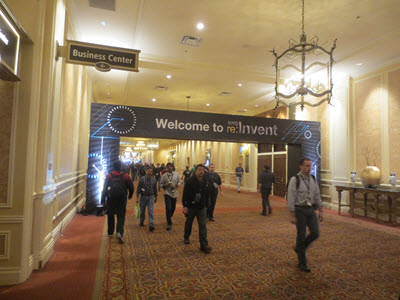 We are 60 days away from AWS re:Invent 2016! I’m already working on a big pile of blog posts and my colleagues are working night and day to make sure that you have plenty of opportunities to learn about our services. With two new venues, hands-on labs, certification exams, a full day of additional content, and the re:Source Mini Con (full day technical deep dives), and twice as many breakout sessions as last year, I am confident that you will have plenty to do during the day. After that, we have some great after-hours experiences on the agenda, including the famous wing eating contest, and expanded Pub Crawl, a Harley Ride, the re:Play party, and the re:Invent 5k (that’s kilometers, not kilobytes).
In order to make sure that you are fully prepared before you arrive in Las Vegas, we have put together three webinars. These are free and optional, but I’d recommend attending in order to make sure that you are positioned to make the most of your trip.
Here’s what we have:
How to Reserved Your Seats -We expect to have over 450 breakout sessions spread across 20 or so tracks. This year, based on your feedback, you will be able to reserve your seats ahead of time. That way you can make better plans and remove some uncertainty. In the webinar, you’ll learn how to reserve seats and build your calendar using our online tool. Here are the webinar sessions (all times are PT):
- October 12, 2016 – 9 to 10 AM.
- October 12, 2016 – 6 to 7 PM.
- October 27, 2016 – 1:30 to 2:30 PM.
Deep Dive on AWS re:Invent 2016 Breakout Sessions – Each of the tracks that I mentioned above will contain sessions at the introductory, advanced, and expert levels. This webinar will help you to learn more about the tracks and the sessions so that you can start to prepare your schedule. Again, the sessions, with times in PT:
- October 17, 2016 – 9 to 10 AM.
- October 17, 2016 – 6 to 7 PM.
Know Before You Go – The webinar will provide you with the big picture: keynotes, breakout sessions, training and certification, re:Invent Central, networking opportunities, and our popular after-hours activities.
- November 16, 2016 – 9 to 10 AM.
- November 16, 2016 – 5 to 6 PM.
— Jeff;
PS -As we get closer to the big event, I know that many past attendees and AWS Partners will be publishing how-to guides of their own. Time permitting (hah!) I’ll put together a round-up of these posts.
AWS Webinars – September 2016
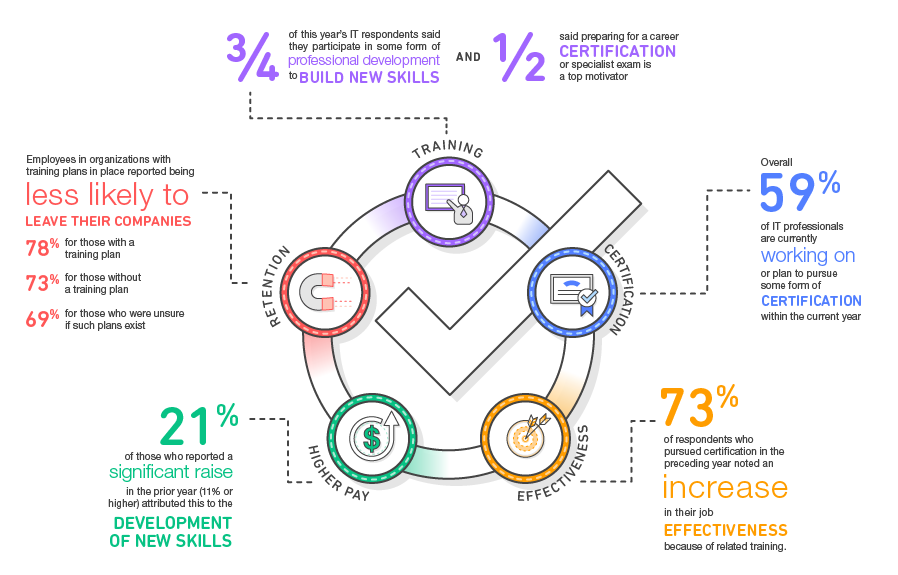
 At the beginning of the month I blogged about the value of continuing education and shared an infographic that ilustrated the link between continued education and increased pay, higher effectiveness, and decreased proclivity to seek other employment. The pace of AWS innovation means that there’s always something new to learn. One way to do this is to attend some of our webinars. We design these webinars with a focus on training and education, and strongly believe that you can walk away from them ready, willing, and able to use a new AWS service or to try a new aspect of an existing one.
To that end, we have another great selection of webinars on the schedule for September. As always they are free, but they do fill up and I strongly suggest that you register ahead of time. All times are PT, and each webinar runs for one hour:
September 20
- 9:00 AM –Deep Dive: Amazon Redshift for Big Data Analytics.
- 11:30 AM – Monitoring Containers at Scale.
September 21
- 9:00 AM – Getting Started with Cognito User Pools: Easily Add User Sign-Up and Sign-In to Your Apps.
- 11:30 AM – Best Practices to Migrate Your Data Warehouse to Amazon Redshift.
- 1:00 PM – Log Analytics with Amazon Elasticsearch Service.
September 22
- 9:00 AM – AWS Device Farm and Best Practices for Test Automation.
- 11:30 AM – Real-Time Data Processing Using AWS Lambda.
September 26
- 10:30 AM – AWS Services Overview.
September 27
- 9:00 AM – Automating Compliance Defense in the Cloud.
- 10:30 AM – AWS Infrastructure as Code: Best Practices with AWS CloudFormation.
- Noon – Overview and Best Practices for Amazon Elastic Block Store.
September 28
- 9:00 AM – Addressing Amazon Inspector Assessment Findings.
- 10:30 AM – Coding Apps in the Cloud to reduce costs up to 90%.
- Noon – Amazon Aurora – New Features.
September 29
- 9:00 AM – Getting Started with AWS IoT.
- 10:30 AM – Getting Started with Managed Database Services on AWS.
- Noon – Building Real-Time Processing Data Analytics Applications on AWS.
— Jeff;
PS – Check out the AWS Webinar Archive for more great content!
AWS Webinars – August, 2016
Everyone on the AWS team understands the value of educating our customers on the best ways to use our services. We work hard to create documentation, training materials, and blog posts for you! We run live events such as our Global AWS Summits and AWS re:Invent where the focus is on education. Last but not least, we put our heads together and create a fresh lineup of webinars for you each and every month.
We have a great selection of webinars on the schedule for August. As always they are free, but they do fill up and I strongly suggest that you register ahead of time. All times are PT, and each webinar runs for one hour:
August 23
- 9:00 AM – Introducing Amazon EMR Release 5.0: Faster, Easier, Hadoop, Spark, and Presto.
- 10:30 AM – Best Practices for Data Center Migration Planning.
- Noon – Best Practices for Running SAP HANA Workloads with Amazon EC2 X1 Instances.
August 24
- 9:00 AM – Amazon Aurora for the Enterprise: Lower Cost, Better Performance.
- 10:30 AM – Getting Started with Serverless Architectures.
- Noon – Best Practices for Building a Data Lake with Amazon S3.
August 25
- 9:00 AM – Managing IoT and Time Series Data with Amazon ElastiCache for Redis.
- 10:30 AM – Running Microservices and Docker on AWS Elastic Beanstalk.
- Noon – Getting Started with Microsoft SQL Server 2016 on Amazon EC2.
August 30
- 9:00 AM – Introduction to Amazon Kinesis Firehose.
- 10:30 AM – Building Serverless Chat Bots.
- Noon – Continuous Delivery to Amazon ECS.
August 31
- 9:00 AM – Stream Data Analytics with Amazon Kinesis Firehose & Redshift.
- 10:30 AM – Getting Started with AWS Device Farm.
- Noon – AWS IoT Button.
— Jeff;
PS – Check out the AWS Webinar Archive for more great content!
AWS Webinars – July, 2016
We have some awesome webinars lined up for next week! As always, they are free but do often fill up, so go and and register. Here’s the lineup (all times are PT and each webinar runs for one hour):
July 26
- 9:00 AM – Getting Started with AWS.
- Noon – SQL to NoSQL: Best Practices with Amazon DynamoDB.
July 27
- 9:00 AM – Mobile App Testing with AWS Device Farm.
- 10:30 AM – Amazon EC2 Masterclass.
- Noon – Getting Started with IoT.
July 28
- 9:00 AM – Intro to Elastic File System.
- 10:30 AM – Getting Started with Amazon Redshift.
- Noon – Running fast, interactive queries on petabyte datasets using Presto.
July 29
— Jeff;
AWS Webinars – April 2016
Our 2016 series of webinars continues with a strong set of 200-level topics in April. The webinars are free, but space is limited and you should sign up ahead of time if you would like to attend. Here’s what we have on the calendar for the last week of April (all times are Pacific):
Tuesday, April 26
Are you ready to launch and connect to your first EC2 instance? Do you want to learn how to use Amazon Simple Storage Service (S3) to store and share files? Our getting started webinar will show you how to do both.
Webinar: Getting Started with AWS (9 – 10 AM).
Do you want to learn how to use Apache Spark to analyze real-time streams of data on an Amazon EMR cluster? Do you want to know how to use Spark as part of a system that includes Amazon DynamoDB, Amazon Redshift, Amazon Kinesis, and other big data tools? This webinar will show you how to use Spark to address common big data use cases.
Webinar: Best Practices for Apache Spark on AWS (10:30 – 11:30 AM).
Are you interested in running a commercial relational database in the cloud? Do you want to know more about best practices for running single and multiple database instances, or do you have questions about costs and licensing? Attend this webinar to learn more about Amazon RDS running Oracle.
Webinar: RDS for Oracle: Quick Provision, Easy to Manage, Reduced Cost (Noon – 1 PM).
Wednesday, April 27
In today’s real-time world, going from raw data to insights as quickly as possible has become a must. Fortunately, a number of AWS tools can help you to capture, store, and analyze real-time streaming data. Attend this webinar to learn about Amazon Kinesis Streams, Lambda, and Spark Streaming on Amazon EMR.
Webinar: Getting Started with Real-Time Data Analytics on AWS (9 – 10 AM).
As you move your business and your applications to the cloud, you should also look at modernizing your development and deployment practices. For example, many AWS customers use tools like AWS CodePipeline and AWS CodeDeploy to implement continuous delivery. Attend this webinar to learn more about what this means and how to put it in to practice in your own organization.
Webinar: Getting Started with Continuous Delivery on AWS (10:30 – 11:30 AM).
Now that Amazon S3 is a decade old, we have a wealth of experience to share about the best ways to use it for backup, compliance, archiving, and many other purposes. This webinar will share best practices for keeping your data safe, and will also provide an overview of several different transfer services.
Webinar: S3 Best Practices: A Decade of Field Experience (Noon – 1 PM).
Thursday, April 28
AWS Lambda brings some new flexibility to the development and deployment process. When used in conjunction with AWS Storage Gateway, it can be used as the basis for an automated development workflow that easily supports distinct development, staging, and production environments. Attend this webinar to learn more.
Webinar: Continuous Delivery to AWS Lambda (9 AM – 10 AM).
Amazon Aurora is a MySQL-compatible database engine that can boost performance, reliability, and availability while reducing the total cost of ownership. Join this webinar to learn more about Aurora and to better understand how to migrate your existing on-premises or cloud-based databases to it.
Webinar: Migrating Your Databases to Amazon Aurora (10:30 – 11:30 AM).
Containers and microservices are both a natural fit for the cloud. Attend this webinar to learn more about the challenges that might arise and the best practices to address them.
Webinar: Running Microservices on Amazon ECS (Noon – 1 PM).
— Jeff;
AWS Webinars for February & Early March 2016
Last month I challenged you to learn something new in 2016 and offered up our January webinar series as a starting point. We’ve put together another strong lineup for February and I’d like to share it with you now. As always, the webinars are free but space is limited and you should sign up ahead of time if you would like to attend.
Here’s what we have in store for February and early March (all times are Pacific):
Tuesday, February 23
Many developers are using containers to simplify the packaging, deployment, and operation of their applications. This deep-dive webinar will show you how to use Amazon EC2 Container Service to simplify the use of Docker in production.
- Webinar: Amazon EC2 Container Service Deep Dive (9 – 10 AM).
- Blog Post: Amazon EC2 Container Service – Container Management for the AWS Cloud.
The AWS Database Migration Service will help you to migrate your existing relational data to the cloud. This webinar will tell you how:
- Webinar: Introduction to AWS Database Migration Service (10:30 – 11:30 AM).
- Background Info: Now in Preview: AWS Database Migration Service.
Do you want to allow your on-premises applications to take advantage of cloud storage? Learn more about some hybrid storage models in this webinar:
- Webinar: Using AWS Cloud Storage as the Foundation for Your Hybrid Strategy (Noon – 1 PM).
- Background Info: What is Cloud Storage?
Wednesday, February 24
Are you eager to get business value from your Big Data projects? Attend this webinar to learn how your peers and competitors are doing it!
- Webinar: 451 Research and AWS: Achieving Business Value with Big Data (9 – 10 AM).
Are you puzzled by the term NoSQL? Learn about what it is and what it can do for you in this webinar:
- Webinar: Introduction to DynamoDB – The Fully-Managed NoSQL Service on AWS (10:30 – 11:30 AM).
- Blog Plost: Amazon DynamoDB – Internet-Scale Data Storage the NoSQL Way.
Building mobile apps? Learn how to use AWS Device Farm to test them!
- Webinar: Automate Your App Tests with Appium and AWS Device Farm (Noon – 1 PM).
- Blog Post: AWS Device Farm – Test Mobile Apps on Real Devices.
Thursday, February 25
New environments bring new security challenges! If you are building IoT (Internet of Things) applications, this webinar is a must!
- Webinar: Best Practices for IoT Security in the Cloud (9 – 10 AM).
- Blog Post: AWS IoT – Cloud Services for Connected Devices.
AWS Lambda gives you the power to build serverless applications that require no administration and can scale with no effort. Join our webinar to learn how Lambda can now access functionality within a VPC (Virtual Private Cloud):
- Webinar: Introducing VPC Support for AWS Lambda (10:30 – 11:30 AM).
- Blog Post: Access Resources in a VPC from Your Lambda Functions.
Handling Big Data requires some architectural considerations and design patterns that might not be obvious at first. Learn more at this webinar:
- Webinar: Architectural Patterns for Big Data on AWS (Noon – 1 PM).
- Background Info: Big Data on Amazon Web Services.
Tuesday, March 1 & Thursday, March 3
Migrating your Windows-based applications to the cloud does not necessarily entail stepping out of a familiar and comfortable environment. During our virtual hands-on labs an instructor will guide you through the process of configuring, launching, and securing a Windows virtual machine in the AWS Cloud:
- Webinar: Hands-On Lab: Windows Workloads on AWS (9 – 10:30 AM, March 1).
- Webinar: Hands-On Lab: Windows Workloads on AWS (9 – 10:30 AM, March 3).
- Background Info: Getting Started with Microsoft Windows on AWS.
Jeff;
PS – Your suggestions for future webinars are welcome! Leave me a comment and I will share it with the team.
AWS Webinars for January, 2016
Did you resolve to learn something new in 2016? If so, you should attend an AWS webinar!
Each month, we run a series of webinars that are designed to bring you up to speed on the latest AWS services & features, and to make sure that you are aware of the best ways to put them to use. The webinars are conducted by senior AWS Product Managers and Solution Architects and often include a guest speaker from our customer base.
The webinars are free but “seating” is limited and you should definitely sign up ahead of time if you want to attend (all times are Pacific). Here’s what we have in store this month:
Tuesday, January 26
There are several different ways to deploy your applications on AWS including AWS Elastic Beanstalk, AWS CodeDeploy, and Amazon EC2 Container Service. This webinar will help you to understand the strengths of each service and provide you with a framework to help you to decide which one to use.
- Webinar: Introduction to Deploying Applications on AWS (9 – 10 AM).
AWS IoT is a managed cloud platform that lets connected devices interact with cloud applications and other devices. This webinar will show you how constrained devices can send data to the cloud and receive commands back to the device.
- Webinar: Getting Started with AWS IoT (10:30 – 11:30 AM).
- Blog Post: AWS IoT – Cloud Services for Connected Devices.
AWS provides many options and tools that are a great fit for your big data needs. This webinar will provide you with an overview of the options including Hadoop, Spark, and NoSQL databases.
- Webinar: Getting Started with Big Data on AWS (Noon – 1 PM).
- Blog Post: Amazon EMR Update – Apache Spark 1.5.2, Ganglia, Presto, Zeppelin, and Oozie.
Wednesday, January 27
Amazon Aurora is a fast and cost-effective relational database designed to be compatible with MySQL.
- Webinar: Amazon Aurora for Enterprise Database Applications (9 – 10 AM).
- Blog Post: Amazon Aurora – New Cost-Effective MySQL-Compatible Database Engine for Amazon RDS.
Do you have existing data that you want to bring to the cloud? Our data migration webinar will review the options and help you to choose the one that fits your use case:
- Webinar: Cloud Data Migration: 6 Strategies for Getting Data into AWS (10:30 – 11:30 AM).
- Blog Post: AWS Import/Export Snowball – Transfer 1 Petabyte Per Week Using Amazon-Owned Storage Appliances.
Many developers are using containers to simplify the packaging, deployment, and operation of their applications. This webinar will show you how to use Amazon EC2 Container Service to simplify the use of Docker in production.
- Webinar: Introduction to Docker on AWS (Noon – 1:00 PM).
- Blog Post: Amazon EC2 Container Service (ECS) – Container Management for the AWS Cloud.
Thursday, January 28
Machine Learning helps you to extract value from data. This webinar will show you how to build machine learning models and use them to make predictions.
- Webinar: Building Smart Applications with Amazon Machine Learning (9 – 10 AM).
- Blog Post: Amazon Machine Learning – Make Data-Driven Decisions at Scale.
I am always happy to see ways that two or more AWS services can be combined to create something cool. This webinar will show you how to use AWS Lambda and the new AWS IoT service to do just that:
- Webinar: Build IoT Backends with AWS IoT & AWS Lambda (10:30 – 11:30 AM).
- Blog Posts: AWS Lambda – Run Code in the Cloud and AWS IoT – Cloud Services for Connected Devices.
The phrase “infrastructure as code” has become increasingly popular over the last couple of years. This webinar will show you how do implement this new practice using AWS:
- Webinar: Managing your Infrastructure as Code (Noon – 1 PM).
- Blog Post: New AWS Tools for Code Management and Deployment.
— Jeff;